📄 Understanding Rental Agreements: What Every Tenant Should Know
A rental agreement is more than just paperwork—it’s a legal contract that protects both the tenant and the landlord. Before signing any agreement, take time to understand what it contains. Knowing your rights and responsibilities can help you avoid misunderstandings, unexpected expenses, and legal disputes.
What Is a Rental Agreement?
A rental agreement is a written document that outlines the terms and conditions of renting a property. It explains what both the landlord and tenant have agreed to, including payment terms, property rules, and the duration of the tenancy.
Key Things to Check Before Signing
1. Names and Property Details
Ensure the agreement clearly states the names of both the landlord (or authorized agent) and the tenant, along with the correct address of the property being rented.
2. Rent Amount and Payment Schedule
Confirm:
- The monthly or yearly rent.
- When rent is due.
- Accepted payment methods.
- Whether there are penalties for late payments.
Never rely on verbal promises—everything should be documented in the agreement.
3. Duration of the Tenancy
Check:
- The start date.
- The end date.
- Renewal process.
- Notice period required if either party wants to end the agreement.
4. Additional Fees
Understand all charges before making payment. These may include:
- Agency fee
- Legal fee
- Caution fee
- Service charge
- Security or maintenance fees
- Utility bills
Ask for a full breakdown to avoid hidden costs.
5. Maintenance Responsibilities
The agreement should clearly explain:
- Who is responsible for repairs.
- How maintenance requests should be reported.
- Which damages are the tenant’s responsibility.
- Which repairs the landlord will handle.
6. Rules for Using the Property
Some agreements include rules about:
- Pets
- Noise levels
- Parking
- Visitors
- Business activities
- Property modifications
Read these carefully to ensure they fit your lifestyle.
7. Security Deposit
If you’re paying a security or caution deposit, confirm:
- The amount.
- The purpose of the deposit.
- The conditions for refund.
- Situations where deductions may be made.
8. Termination Conditions
Understand:
- How either party can end the tenancy.
- Required notice periods.
- Any penalties for early termination.
Ask Questions Before You Sign
Don’t feel pressured to sign immediately. If anything is unclear, ask the landlord or agent to explain it. It’s better to ask questions now than face problems later.
Keep Copies of Everything
After signing:
- Keep a copy of the rental agreement.
- Save payment receipts.
- Keep records of emails, messages, and maintenance requests.
- Take photos of the property’s condition before moving in.
These records can be useful if disputes arise.
Watch Out for Red Flags
Be cautious if:
- You’re asked to pay without seeing the property.
- The landlord refuses to provide a written agreement.
- Important details are left blank.
- You’re pressured to sign immediately.
- The agreement contains vague or unfair terms.
Final Thoughts
A rental agreement is your protection as much as it is the landlord’s. Reading it carefully, understanding every clause, and asking questions when necessary can save you time, money, and stress.
With Share9ja, you can discover rooms, apartments, shared homes, offices, stores, workspaces, and other shared opportunities. Take time to review every listing, communicate clearly with property owners, and always understand the rental agreement before making any commitment. A well-informed decision is the first step toward a smooth rental experience.
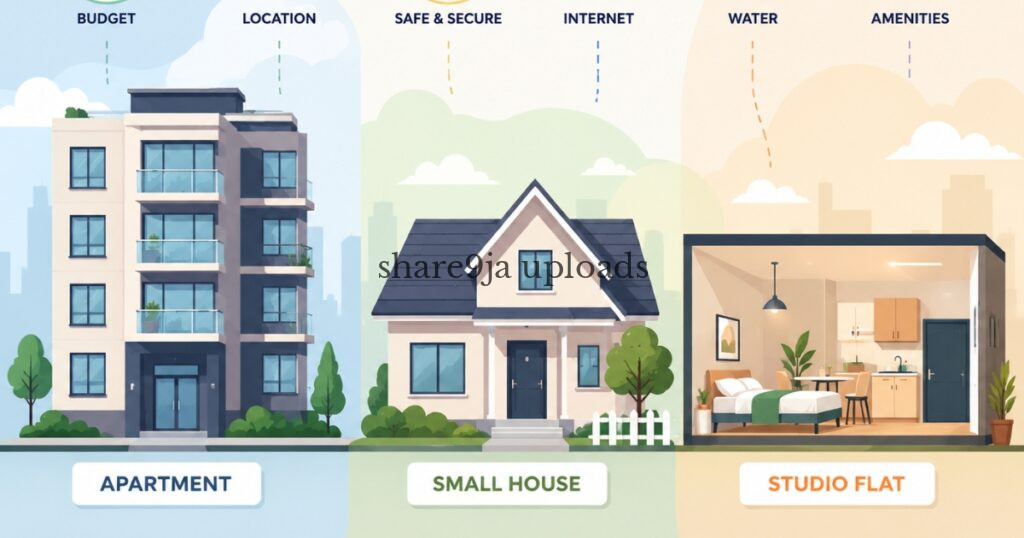
🏡 Finding the Right Rental Property: A Smart Tenant’s Guide
Finding the perfect rental property isn’t just about choosing a place that looks good—it’s about finding a home or workspace that fits your budget, lifestyle, daily needs, and future plans. Taking time to make the right choice can save you money, reduce stress, and improve your overall quality of life.
1. Set a Realistic Budget
Before you start searching, determine how much you can comfortably afford. Remember that your expenses may include:
- Rent
- Security or caution deposit
- Agency and legal fees
- Utility bills
- Service or maintenance charges
- Moving expenses
Choose a property that allows you to live comfortably without putting unnecessary pressure on your finances.
2. Choose the Right Location
Location is one of the most important factors when renting a property. Consider:
- Distance to your workplace or school
- Access to public transportation
- Nearby hospitals and pharmacies
- Markets, supermarkets, and restaurants
- Banks and ATMs
- Security in the neighborhood
- Road conditions and traffic
A great location can save you time, money, and daily stress.
3. Understand Your Space Requirements
Think about what you really need before making a decision. Ask yourself:
- Do I need a room, apartment, office, store, or shared workspace?
- How many bedrooms or rooms do I require?
- Is parking important?
- Do I need furnished or unfurnished accommodation?
- Will I be living alone or with roommates?
Choosing the right size helps you avoid paying for unnecessary space.
4. Inspect the Property Carefully
Never rely only on photos or online descriptions. Visit the property and inspect:
- Walls and ceilings
- Doors and windows
- Plumbing and water supply
- Electrical fittings
- Toilets and bathrooms
- Kitchen facilities
- Ventilation and lighting
Take photos or videos of the property’s condition before moving in.
5. Research the Neighborhood
Spend some time exploring the surrounding area. Talk to nearby residents if possible to learn about:
- Safety
- Noise levels
- Flooding during rainy seasons
- Electricity supply
- Water availability
- General cleanliness
A good neighborhood can greatly improve your living experience.
6. Verify the Landlord or Agent
Always confirm that the person renting the property has the authority to do so. Avoid making payments to anyone whose identity or ownership cannot be verified.
7. Read the Rental Agreement
Before signing anything, ensure you understand:
- Rent amount
- Payment schedule
- Length of tenancy
- Maintenance responsibilities
- Additional fees
- Notice period
- Refund policy for deposits
Never sign an agreement you haven’t fully read and understood.
8. Think About the Future
Choose a property that can meet your needs not only today but for the months or years ahead. Consider future changes in your job, family size, business, or finances.
9. Watch Out for Rental Scams
Be cautious if:
- The rent is unusually cheap.
- You’re asked to pay before viewing the property.
- The landlord refuses to provide documentation.
- You’re pressured to make immediate payment.
- Important details are unclear.
If something feels suspicious, take time to verify before proceeding.
10. Compare Multiple Properties
Don’t settle for the first property you see. Compare several options based on:
- Price
- Location
- Amenities
- Security
- Accessibility
- Overall value
Taking time to compare helps you make a more informed decision.
Final Thoughts
Finding the right rental property is about more than just securing a place to stay—it’s about choosing a home or business space that supports your lifestyle, goals, and peace of mind. Research carefully, ask questions, inspect thoroughly, and never rush into making payments.
With Share9ja, you can discover rooms, apartments, shared homes, offices, coworking spaces, stores, market spaces, and other shared opportunities. Connect with trusted users, compare listings, communicate directly, and find the space that best suits your needs—all in one platform.
🏠 Common Pitfalls to Avoid When Renting a Home
Renting a home is a major decision, and rushing the process can lead to financial loss, stress, or even fraud. Before paying for any apartment, room, or shared accommodation, keep these important tips in mind.
1. Never Pay Before Inspecting the Property
Always visit the property in person or ask someone you trust to inspect it for you. Confirm that the house matches the photos and description provided.
2. Verify the Property Owner or Agent
Ask for proper identification and confirm that the person showing the property has the legal authority to rent it out. If possible, speak with neighbors or the property manager to verify ownership.
3. Read the Tenancy Agreement Carefully
Never sign a rental agreement without reading every section. Make sure you understand the rent amount, payment schedule, duration, maintenance responsibilities, and conditions for renewing or ending the tenancy.
4. Understand All Costs
Ask for a complete breakdown of every payment before making any transfer. This may include rent, caution fee, service charge, legal fee, agency fee, electricity, water, waste disposal, and other applicable charges.
5. Check Security and Safety
Visit the area during both the day and night if possible. Look out for security measures, street lighting, flood risks, emergency exits, and the overall condition of the neighborhood.
6. Inspect Utilities
Confirm that water, electricity, drainage, and internet services are available and working properly. Repairing faulty utilities after moving in can be expensive.
7. Document the Property’s Condition
Before moving in, take photos and videos of every room, including walls, floors, ceilings, doors, windows, and any existing damages. This can help prevent disputes when you move out.
8. Be Careful of Deals That Look Too Good
If the rent is far below the normal market price, be extra cautious. Fraudsters often use unusually cheap prices to attract victims.
9. Research the Neighborhood
Consider important factors such as transportation, schools, hospitals, markets, workplaces, security, and accessibility before making your final decision.
10. Keep Payment Records
Always pay through traceable methods when possible and keep receipts, bank transfer confirmations, agreements, and all communication with the landlord or agent.
Final Tip
A good rental decision is based on careful research, proper verification, and patience. Taking a little extra time before making payment can save you from unnecessary stress and financial loss.
Share9ja helps you discover rooms, apartments, shared spaces, and trusted opportunities to connect with people looking to share homes, workspaces, stores, offices, and more. Explore listings, ask questions, verify details, and make informed decisions before you commit.
🚚 Tips for a Smooth Move-In: Start Your New Chapter the Right Way
Moving into a new home, apartment, shared space, or office is an exciting milestone. However, without proper planning, the process can quickly become stressful. A little preparation can help you settle in comfortably, avoid unnecessary expenses, and make your new space feel like home from day one.
1. Plan Your Move Early
Create a moving checklist at least a few weeks before your move. List everything you need to do, including packing, arranging transportation, transferring utilities, and notifying important contacts of your new address.
Planning ahead reduces last-minute stress and helps ensure nothing important is forgotten.
2. Confirm Your Move-In Date
Before moving, confirm the agreed move-in date and time with the landlord, property manager, or roommate. Make sure the property is ready and that you’ll have access to the keys when you arrive.
3. Inspect the Property Before Moving In
Walk through the property carefully before bringing in your belongings. Check:
- Doors and locks
- Windows
- Water supply
- Electricity
- Toilets and bathrooms
- Kitchen fittings
- Walls and ceilings
Report any issues immediately so they can be documented and resolved.
4. Take Photos and Videos
Record the condition of every room before unpacking. Capture any existing damage, stains, cracks, or faulty fixtures.
These records can help protect you if there are disagreements about property damage when you move out.
5. Pack Smart
Label your boxes according to each room, such as:
- Kitchen
- Bedroom
- Bathroom
- Living Room
- Office
Keep important documents, valuables, medications, chargers, and a few days’ worth of clothing in a separate, easy-to-access bag.
6. Set Up Essential Services
Before settling in, ensure essential services are available, including:
- Electricity
- Water
- Internet
- Waste collection
- Cooking gas (if applicable)
It’s much easier to move into a home that’s ready for daily living.
7. Change Your Address Where Necessary
Update your address with:
- Banks
- Employers
- Schools
- Delivery services
- Subscription providers
- Family and close friends
This helps prevent missed deliveries or important communications.
8. Introduce Yourself to Neighbors
A simple greeting can go a long way. Friendly neighbors can provide useful information about the area, recommend local services, and help you feel more comfortable in your new environment.
9. Prioritize Safety
As soon as you move in:
- Test door and window locks.
- Learn emergency exit routes.
- Save emergency contact numbers.
- Locate nearby hospitals and police stations.
Feeling safe in your new environment is just as important as feeling comfortable.
10. Unpack One Room at a Time
Don’t try to unpack everything at once. Start with the essentials, such as the bedroom, bathroom, and kitchen, then work through the remaining rooms gradually.
Taking your time helps keep the process organized and less overwhelming.
Final Thoughts
Moving into a new space marks the beginning of a fresh chapter. With good planning, careful inspection, and a little organization, you can enjoy a smooth transition and settle in with confidence.
Share9ja makes it easier to discover rooms, apartments, shared homes, offices, stores, coworking spaces, and other shared opportunities. Whether you’re moving into a new home, starting a business, or looking for a shared workspace, Share9ja helps you connect with the right people and the right spaces for a successful new beginning.
Comments